Sunday, May 14, 2006

In Search of the Shenandoah

If you have ever driven on I-77 in SE Ohio then you may have seen a sign on the side of the road that states “Crash site of the Shenandoah”, well there are three crash site and you have to get off onto the back dirt roads to find them all, so here we go.

First you have to find Ava, Ohio, then drive to the south end of town or the block, it’s a very small town, look for Raynor’s Service Center then look for a trailer next to it with Shenandoah printed across the front, this is it.
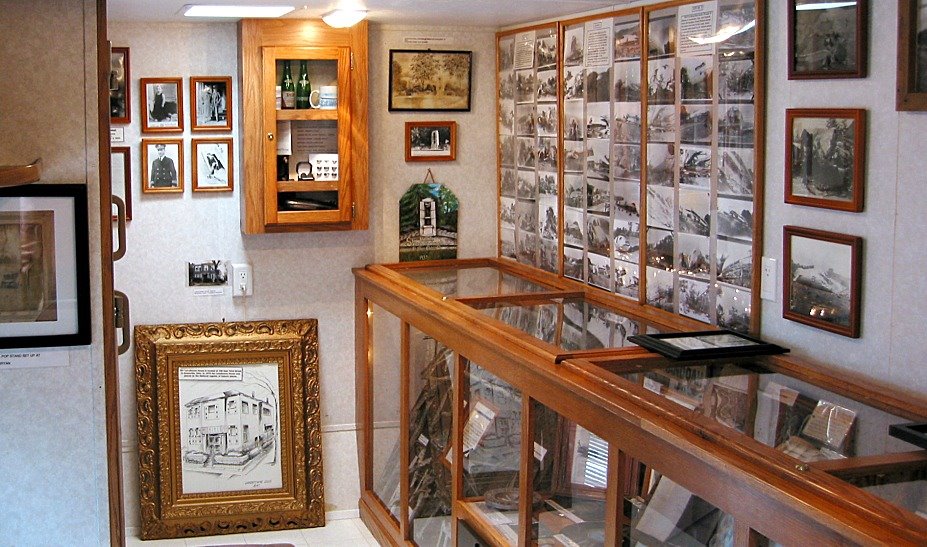
If it’s not open then step inside the Service Center and ask for Bryan, the owner, he’ll be more then glad to open it up for you and tell you all about the Shenandoah, Bryan is probably the most knowledgeable person on the Shenandoah there is.
Bryan’s grandfather started this business over 75 years ago and was present when the Shenandoah crashed. We found it hard to believe how much great stuff he was able to exhibit inside the trailer, this is the best little museums that we have visited.
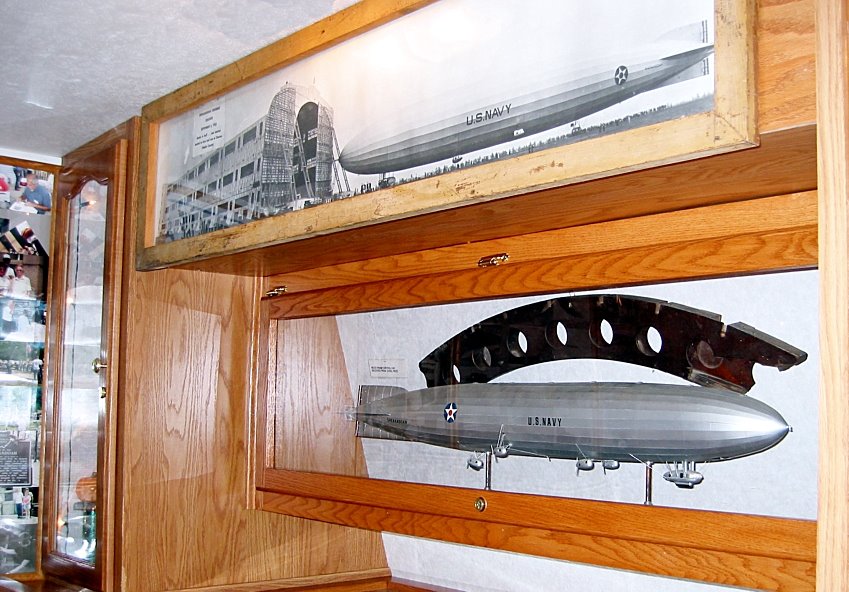
He has many hands on exhibits which include parts of the framing that were made from duralumin, lighter then aluminum and stronger then steel, he’ll hand you a piece and tell you to try and bend it, you can’t, pieces of the outer skin of the ship which feel thinner then a sheet of paper and pieces of the bladder that held the helium, called “goldbeaters skin” it was made from the lining of an oxen’s stomach, they needed over 750,000 oxen to make all the bladders. A bladder made from stomach just doesn’t sound right. Bryan can provide you with a map and directions to all three-crash sites if you want to hunt them down and now, the story of Captain Lansdowne and the Shenandoah.

Shenandoah, an Algonquian Indian word meaning “Daughter of the Stars” was the name chosen by the Navy for America’s first lighter-then-air dirigible. Commissioned in October 1923 she was 680-feet long, 78-feet in diameter and over 93-feet tall, her 5 Packard engines produced a total of 1625 horsepower allowing her to cruise at 50 knots. Total cost 2.9 million dollars (and that’s 1923 dollars). Not only was she the first rigid airship in America she was also the first to use helium and the first to be moored to a floating mast when she tied up with the USS Patoka during maneuvers

The Shenandoah had just started a 6-day publicity tour, when early September 3 1925 she ran into a terrible thunderstorm over southeastern Ohio. The strong winds tore the ship in two causing the control car to break away and fall to the earth near Ava, Ohio (Crash site 1). The stern section continued for about another mile before crashing in Ava, Ohio (Crash site 2). The bow still afloat and being blown by the strong winds, remained aloft for another 13 miles until a farmer managed to grab one of the lines and tied it off to an oak tree near Sharon, Ohio saving the lives of the seven crew members who remained aboard. Fourteen of the 43-crew members perished in the crash, among them was the Captain, Lt Commander Zachary Lansdowne, a graduate of the Naval Academy and who was born and raised in Greenville Ohio, less then 160 miles from the crash site. Ironically this was to be Lansdowne’s last flight, he was to be transferred to sea duty immediately following the end of this flight. Lt Commander Lansdowne told the Navy that he did not want to fly this route; being raised in this area he knew about the sudden storms that could come up during September and wanted a more southerly route. The Navy insisted on the original route.

Since we’re going to be in the area for a week we thought that we would seek them out; the first site we would have never found without Bryan’s directions. It’s located on his property; he is so into the Shenandoah that he bought the property to make sure it would always be remembered. This is where the ship broke in half causing the control compartment, which hangs under the ship to break away and fall to the earth. A few people survived this fall, but Captain Lansdowne landed on a fence post and was impaled, causing his death. Site #2 is on the interstate and we’re still trying to figure out how to get to it without stopping on the interstate and climbing the fence. There is a monument in Ava to commemorate the crash and list the names of those who died; this is normal considered site #2. Site #3 is about a 20 miles drive but since we were near another item that we were looking for and Bryan had given us directions to that we will now take a little detour (or Detour through History as Cathy would say).

John Gray. What? You don’t know who he is? Well John Gray was born in 1764 at George Washington’s Mt Vernon, and lived there until he was old enough to join General Washington and his father in fighting the American Revolution. John’s dad was killed in battle during the Revolution; John managed to make it through all the battles and returned to Mt Vernon where he remained friends with the first President until George’s death. His life-long friendship with the First President is pretty unique, but what John is famous for is that he was the last survivor of the American Revolution in the nation, dying on March 29, 1868 at the age of 104. Two others laid claim to being the last survivor but research done near the time of John’s death proved that he was definitely the last one. If you think about it, George Washington was referred to as the “First soldier of the revolution” and here John, who was born on George Washington’s plantation at Mt Vernon, was the “Last soldier of the revolution” History sure can be funny when you look at it in the right way.

We took all the dirt roads, managed to find the little family cemetery where John is buried and paid our respects to an American Hero.

End of the detour, Ok now we’re back on the road looking for crash site number 3. We followed all the directions that Bryan gave us and found it without any problem at all; it’s right on the side of a county road and has two different markers. It’s also where the radar cop hides to catch all the speed racers that come through here.

You think we’re done here, no way, Bryan told us to go a few miles past the crash site and look for something really big. He hasn’t steered us wrong yet; a few more miles it is. We rounded a turn in the road and saw a nice little roadside park with the biggest steam shovel bucket you could imagine. The Big Muskie was a mammoth size crane that was built specially to work in this strip coal mine. The crane itself was dismantled and sold for scrap, it weighed in at 27 million pounds, it was a diesel electric that produced over 52,000 horsepower, it averaged 18,000 kilowatts per hour or enough to provide 90% of the electrical needs of the city of Las Vegas. The bucket remains on display to remind people of the strip mining that took place in this part of Ohio. The bucket alone weighs 460,000 pounds, and was capable of holding 325 tons of coal. While we were there the caretaker who stays in a trailer, an old guy in his mid 70’s, came out to say hi, I told him that Bryan from the museum had sent us down here to see the bucket. He asked us if Bryan told us about the crash site down the road and we said that we just came from there. Then he asked if he told us the story of the farmer who grabbed a rope and tied the bow section off to an oak tree, and when I said that he had, he said that was his dad.

His dad was up early that morning because of the storm when he saw a big dark object floating overhead and he said that it was screaming at him, once he got over his fear of this big dark floating object screaming at him he realized that it was human voices that he was hearing, that’s when he grabbed one of the ropes hanging down and tied it off to a tree saving the lives of the seven crew members that remained aboard.

All this and we still managed to find a great little diner for lunch, I could continue with stories about Johnny Appleseed and the first oil well drilled in America but I’m getting tired so I’ll save those for later.

Thursday, May 04, 2006

Just a lot of Stuff

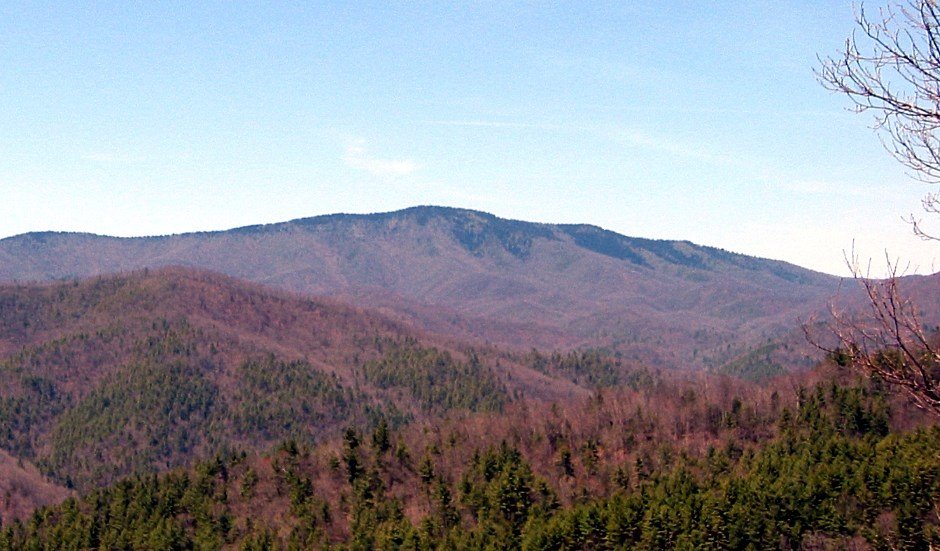
After leaving The Great Smoky Mountains, we drove to the little town of Abingdon, Virginia; our goal here was for Cathy to do a little genealogy and for us to do a bike ride on the Virginia Creeper Trail. The day we got there was sunny and warm but that would be just about the last time we would see the sun this week. After three days of rain and Cathy getting burnt out looking at court records we woke up to the sun, quickly we loaded the bike on the rack and started heading for the town of Damascus. This is where the load your bike on a trailer and drive you to the top of the mountain and the start of the Virginia Creeper Trail for your 17 miles downhill coast back into town. As soon as we got into the town the clouds rolled in and covered everything, not wanting to do the ride in the rain we turned around and headed back down the mountain in search of a place for lunch. In Abingdon we found a little diner, which didn’t look like much, but we noticed a sign that said that they were written up in Southern Living Magazine so we decided to give it a try. As we were waiting to be seated Cathy noticed the magazine article behind the counter and it stated that you had to try the potato soup, it turned out that this was probably the best potato soup we could remember having. After lunch we stepped outside into the sun and found a ski minus any clouds, it’s bike-riding time, you guessed it half way up the mountain the clouds came in and the rain started and lasted the rest of the week.
We did find The Tavern in Downtown Abingdon but it’s only open for dinner and very expensive at that, the reason I mention the Tavern is that it is the oldest building in Abingdon being built in 1779 and it was started by one of Cathy’s ancestors.
While we were there we also drove over the mountain to Tazewell, this road is a true mountain road and does not allow vehicle over 25 feet, cause they would never make it around the hairpin turns.


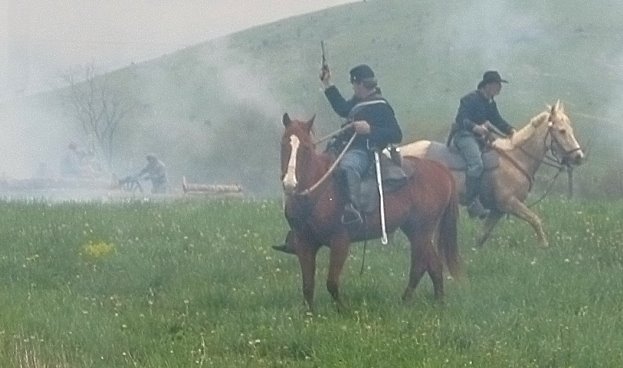
The reason we went over there was for the Civil War Re-enactment of the skirmish of Jeffersonville and to everybody’s disappointment it ended just like it did 142 years ago, the north won. Instead of taking the 30-mile long mountain road back home Cathy made me drive around it, 76 miles.


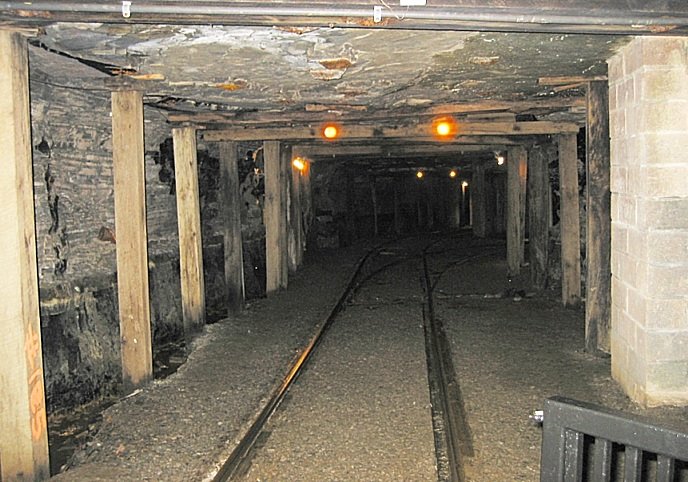
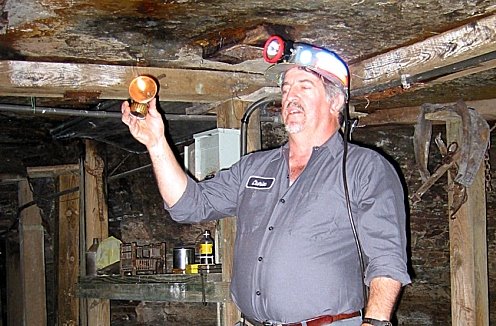
The next leg of our journey took us a full 100 miles to Beckley W. Virginia, Home of the Beckley Exhibition Coal Mine, the only coal mine in the USA that offers tours. The mine is located in the City Park, the park was donated to the city years back and they converted it into a park, while doing this they discovered a buried entrance to the mine. It has since been reopened for the purpose of giving tours; all the tour guides are retired miners and can answer any question you might have, the one we had “Charlie” had everybody laughing the entire tour.

They take you back in on one of the old electric mining cars and make about 5 stops at different parts of the mine to explain how things were done, after leaving the mine we toured the restored mining town that is on site there.
Our campground was right above the mine, so at one point of the tour we were 185 feet below our motor home

We are now in Washington PA, it’s about 30 miles SW of Pittsburgh, 30 miles NE of Unionville and about 35 miles SE of Steubenville, I only mention this because these are the towns we will be spending the week in or at least the court house basements of these town.

Three more weeks and well be back in Michigan bugging the kids for the summer.

Monday, April 17, 2006

Through the Smokys to Knoxville

Pretty much just a bunch of photos this week, we've left the south end of the Smokies and are in Knoxville for a week. We've driven through Knoxville a hundred times and figured it was time to stop and see what was here. Of course the first thing we found was the other McKay Used Book store, this is the best used book store in the country. We had a bag of books in the back of the car so I took them in to see what they wanted and they gave us $30 credit, we probably only paid $20 for the books to begin with, with $30 credit we ended up with alot more books. I forgot to mention last week that we were at the Southeast side of the Smokies which is very different from the rest, no tourist traps, no Dollyworld and no crowds.

This is what the welcome sign looks like from Waynesville, N.C. This is what you get to after about 15 miles of one lane road with two way traffic which takes you 45 minutes to drive. There were atleast 30 switchback turns with a very large drop off into the valley, you have to slow to about 5 mph and blow your horn before you start the turn incase someone is coming the other way. We went back as far as the road would go then we hiked back into the woods a few more miles following a beautiful mountain stream. As it turns out this was only about 30 miles from where the family was mauled by the bear. We went back to see the herd of Elks but we got there a little to early in the day and didn't get a chance to see any, they don't come out of the woods until late afternoon, maybe next year.
So we just looked at the mountains.

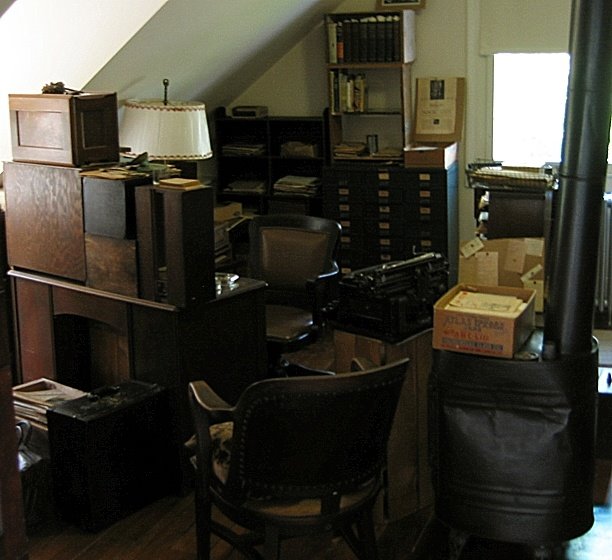
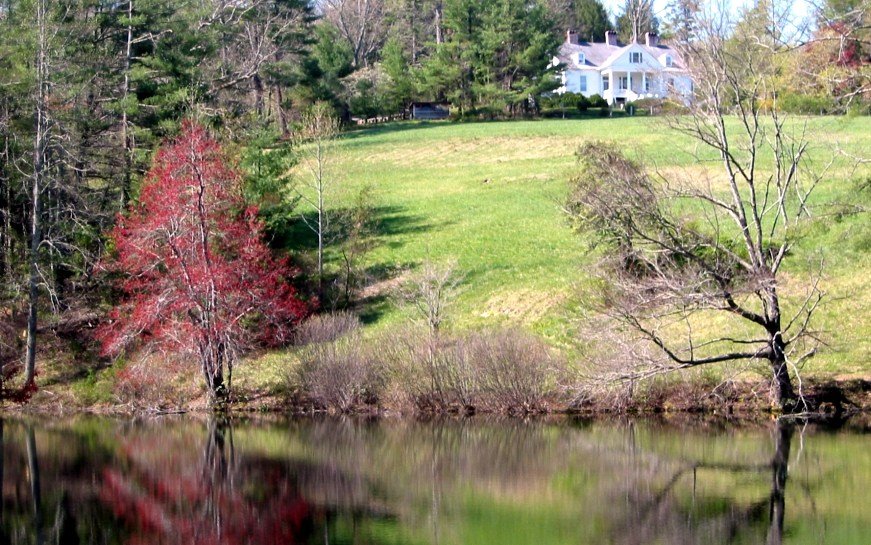
We spent a day at the Carl Sandburg House and Farm. It's a 240 acre estate with a prize winning goat farm that his wife ran, she had many world champion milking goats and was a well known breeder. If you look close at the picture of his office, the little dark room, you'll see that his typing table was an orange crate tipped on its side.
His file cabineets all had Campbells or Canned corn printed on the side of them, he used cardboard boxes to store everything and his pencil holder was a beer can with the top cut off. They said that he just refused to throw anything away.


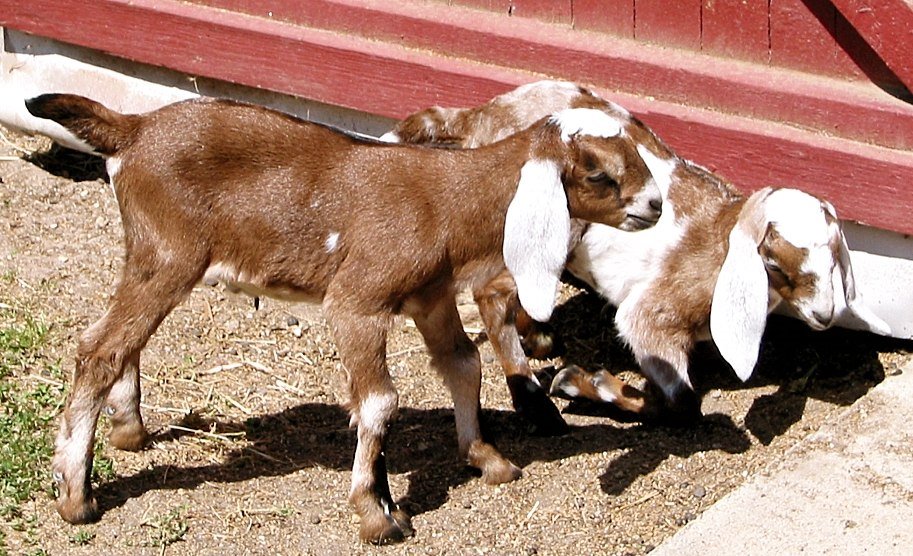
This time of year is birthing time for the goats and we got there at the perfect time, these two little guys are 8 days old and just as cute as could be.
And now back to Knoxville, after we left the book store we wandered around until we hit the river then just followed the road along side it until we came across the UT's gardens. They have a big Agriculture school here and this is the experimental garden were they test plants from around the world and try to adapt them to the Tennessee climate.


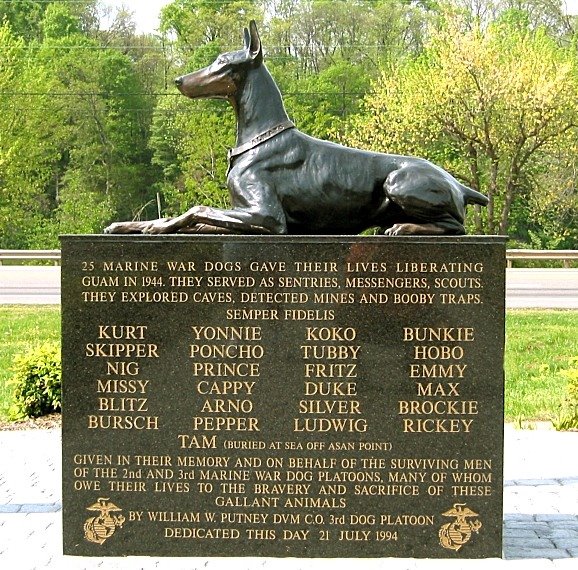
The Veterinarian school is right next door and they have this monument at the front door.


Yesterday was a beautiful sunny day so we returned to the river and went to Volunteer Landing, where here is a mile and a half riverwalk with a few floating restaurants, some fountains and waterfalls for the kids to play in when its hot. There was quiet a few people down there biking and rollerblading and a few just sitting under one of the waterfalls. We tried on of the restaurants and watched the barges and paddle boats go by as we ate.

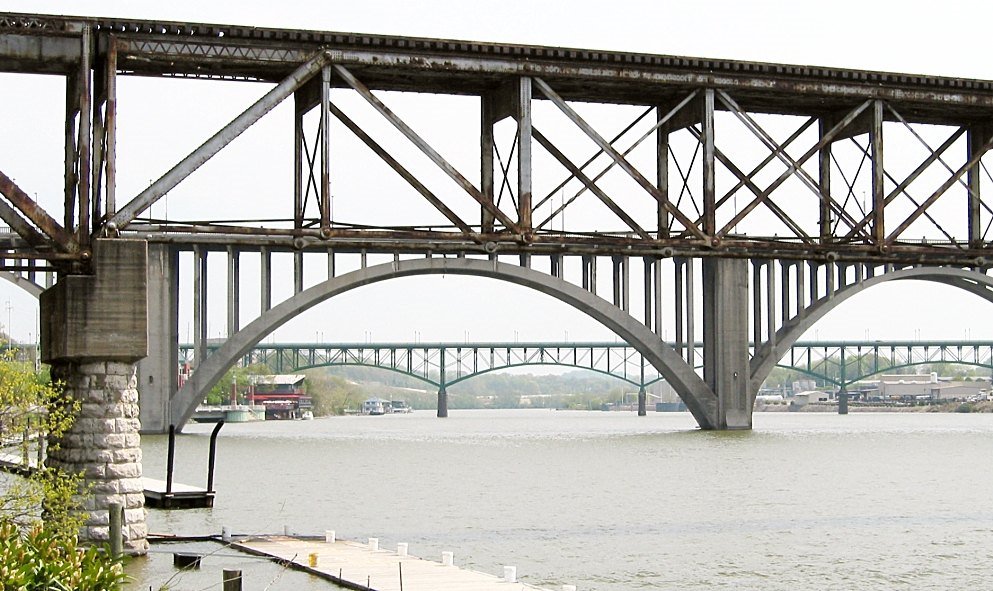
They have a lot of bridges down here, the one in the background was built in th e mid 1800's and is only one of three of this design that is still in use in the United States. If you continue down the walkway and cross another little stream you end up at Fort White which was the original Knoxville. They have restored the Fort and it's right in the middle of Downtownm there are also a few more original buildings and homes from the founding days. But the best thing in the downtown area or along the river or in the city or even in the entire state is the stadium that houses the ORANGE NATION FANS every Saturday during the fall, the birthplace of the great Peyton Manning. Believe it or not.


Next Week we go to Chilhowie VA. to conquer the Appalachian and Virgina Creeper Trails.

Sunday, April 09, 2006

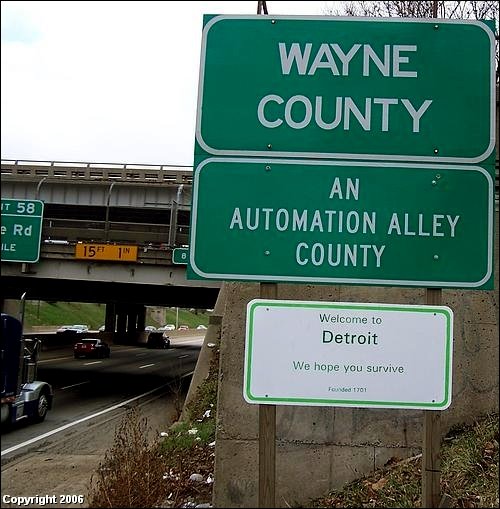
Why we avoid Detroit

For those of you that have never been to Detroit or those of you that haven't been there for quite awhile, this is the reason we avoid it as much as we can.

Saturday, April 08, 2006

The Mts of NE GA and SW N.C.

The title looks like it's written in code.
We were camped about 20 miles from Athens Ga., and could smell the presences of a Military museum nearby so off we go in search of it. It didn't take long and we found the entrance to the Navy Supply Corps Museum, the only trouble was it was the wrong entrance, the private civilian guard there refused to allow us on the base for some reason. Now I know they have a museum and it's open to the public so we decided to sneak in, not really we drove around the base until we found another gate. At this one we asked the guard if we could tour the museum, he had us pull into the parking lot and about 3 minutes later we had an escort to the museum.
PARTIAL PAYMENT CHECK FOR DESERT STORM

The base is located on the old State Normal College Campus, (a women's college during the Civil War) and the museum is housed in an old Carnegie Library building, built in 1910. The building itself is listed on the National Register of Historic places. We didn't realize how important supply officers were until coming here, the Navy runs on supplies and they have to ship hundreds of millions of pounds each year making sure they go to the right places, so without the Supply Officers the Navy would be sunk.
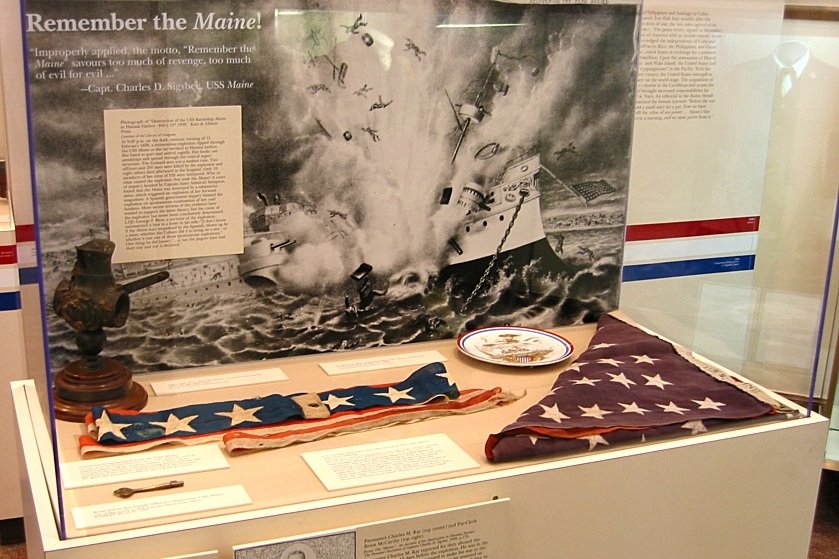
They have many displays and models of the USS Supply, (I through IV) the first being a four mass schooner and the last being a state of the art computerize ship. We spent about an hour and a half to see everything. Remember the Maine and also remember to use the gate on the eastside of the base to get in.


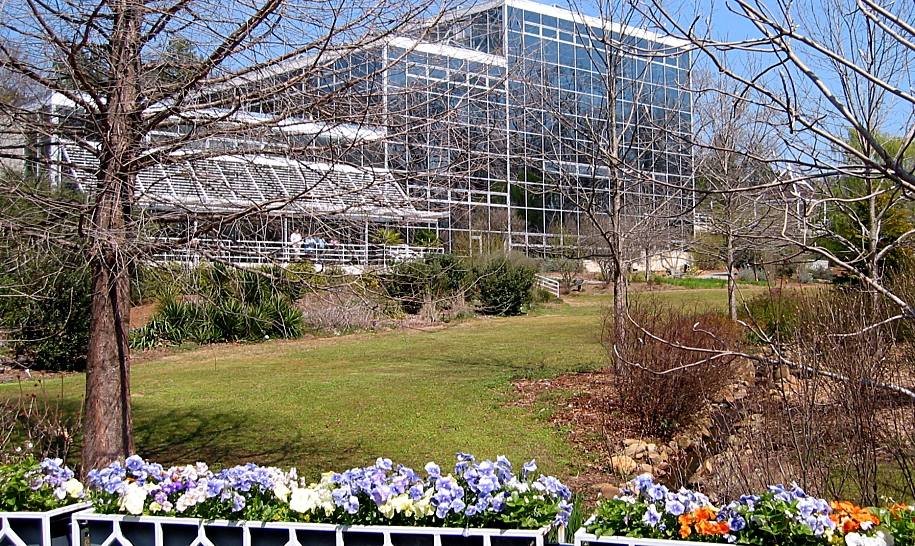
While we were in the area we decided to drop down and see the State Botanical Gardens.
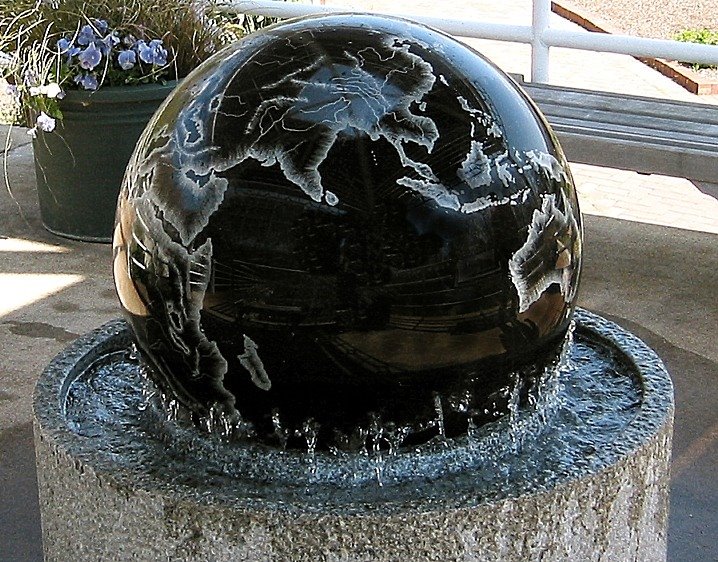
The University of Georgia runs the gardens, the BULLDOGS for those of you that did not it. We spent around two and a half hours here and that included lunch at the little café. The food was excellent and the prices were reasonable but the surroundings were fantastic. We only walked half of the gardens as it was getting late, always leave something to come back to, there is still another 100 acres or so for us to cover and still miles of trails to walk. There is a huge granite globe that rotated while floating in a fountain; you almost have to see it to under stand how it works.


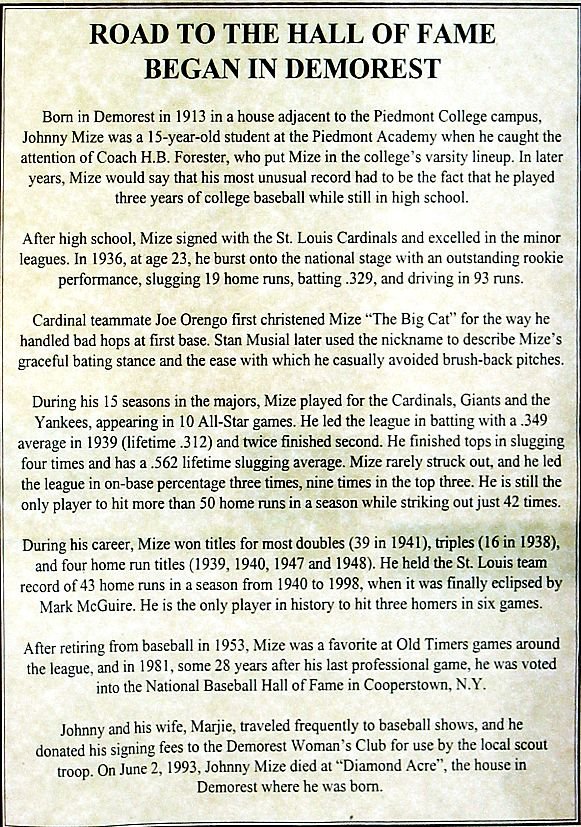
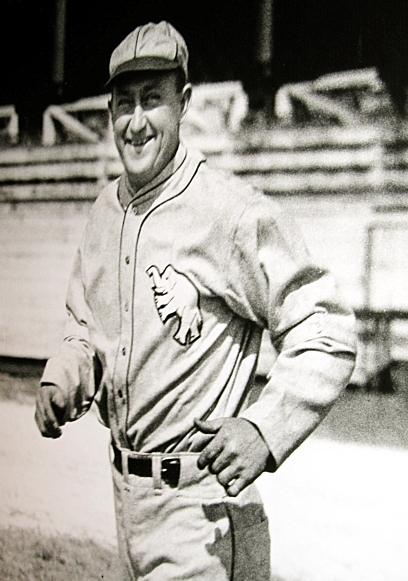
It must be Hall of Fame month because we were just wandering around lost and stumbled on to the campus of Piedmont College that just so happens to be where Johnny Mize went to school and played ball. Who is Johnny Mize you ask? Why he was the original "BIG CAT" of baseball, click the picture and read up on him.
The athletic area of Piedmont his named in his honor, we were there for about an hour looking at the displays they have in the lobby following his major league career.
(Click on picture to the right to enlarge, once it opens click on it again to enlarge it again so you can read it.)


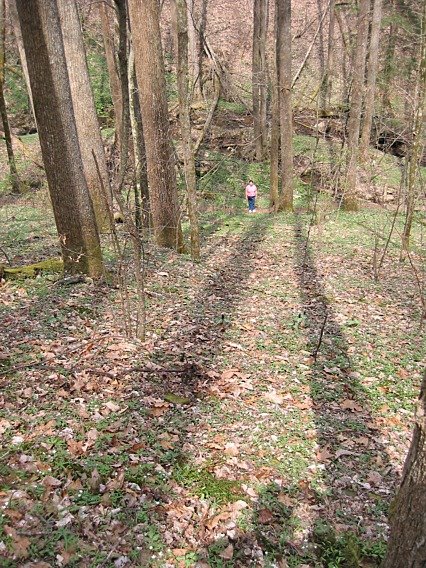
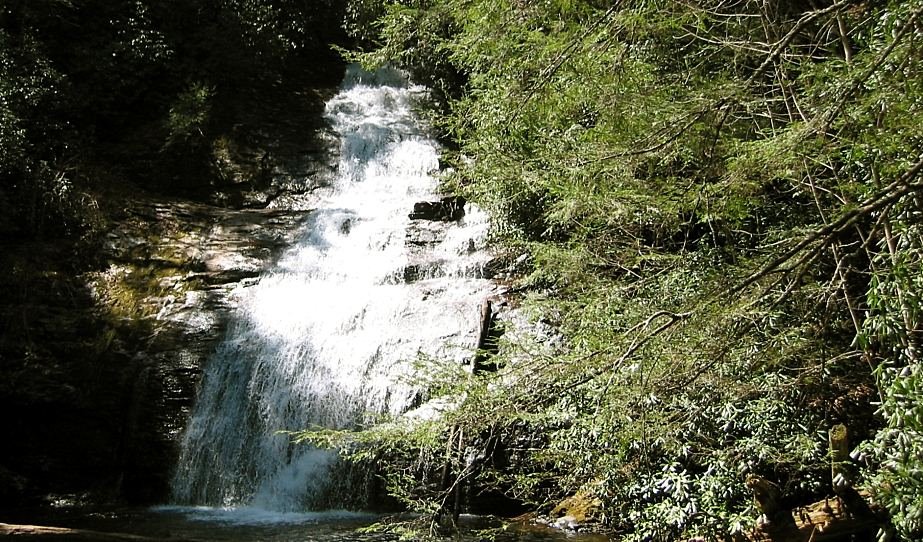
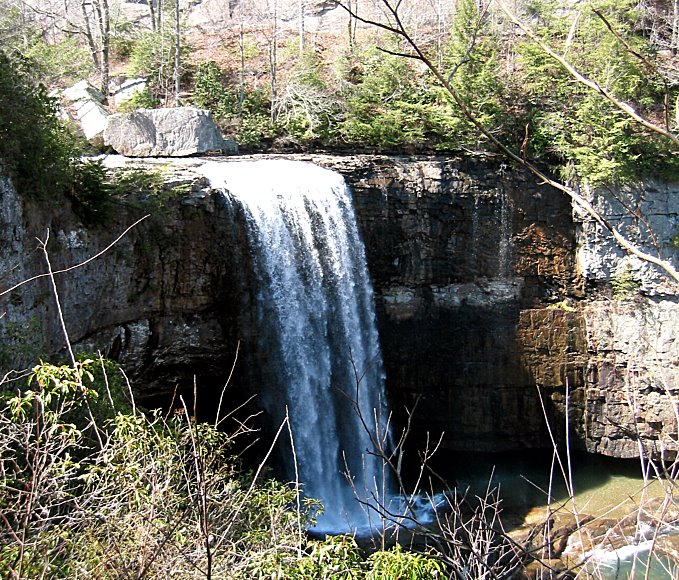
Well as long as we're camped in Helen Ga. We decided to do a little hiking back to a few of the waterfalls plus this helps us keep our youthful figures. The first one we went to involved dodging lumber trucks coming at you on a single lane dirt road that had a 20 to 80 foot drop off into a cool relaxing mountain stream. Once back there I was forced to climb the side of the mountain, they call them hills down here, to find a cache for our hobby. After this one we followed a two lane paved road until it turned into a single lane then a dirt lane then a trail. We kept going and came to a stream, a close look showed that the road continued on the other side so in we went, another 100 yards and it was through another stream, easy way to wash the tires. We then found the parking area for Helton Creek Falls, this one had a nice trail that took you about 300 yards back into the woods to the falls. There is an upper and lower falls and both were great as you can see from the pictures.


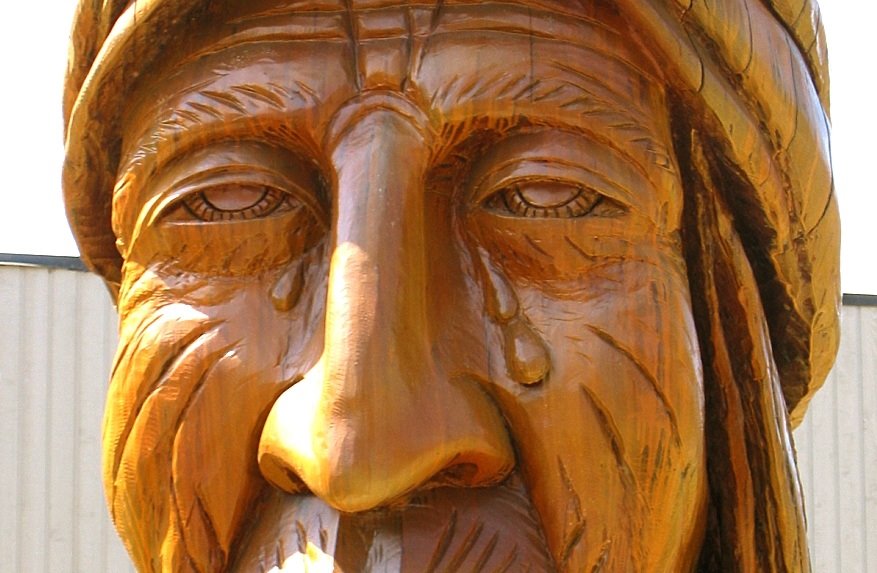
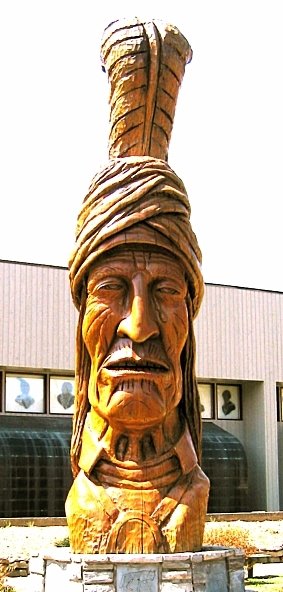
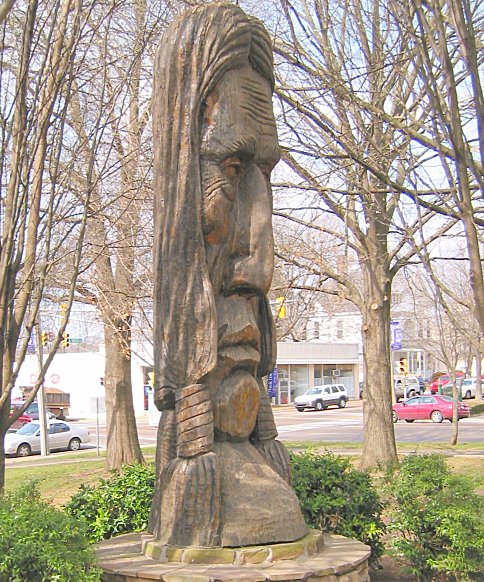
We have moved on to Waynesville N.C. which is right near the Blue Ridge Parkway, the Smokey Mountains and Asheville. We heard a rumor that there was a Whispering Giant in the area, over near the Cherokee Reservation, so we took a drive in search of it, and we found it right away, honest injun we really did. This turned out to be one of the better ones that we have found, five total, only 58 more to go.

Since the carving was right in front of the Museum of the Cherokee Indian we figured that we had to go in. We're glad we did, since in our travels we run across so many different markers and such about the various Indians, this museum brought them all together and made understanding everything about them much easier. It looked small from the outside but we were in there over two hours. After that it was a nice sunny drive back to camp on the Blue Ridge Parkway and get ready for the big storms that are suppose to head our way to night.
More when it happens.

Sunday, March 26, 2006

PLAY BALL !!!!

Today we jumped into the Jimmy James way back machine and took a trip back to the early 1900’s to visit with the greatest baseball player in the history of the game, Ty Cobb ‘The Georgia Peach”

We were just cruising around looking for neat things, and there it was a big sign that said, “Welcome to Royston, Ga – Hometown of Ty Cobb”. Now since we’re two of the biggest baseball nuts and both being big Tiger fans we knew we were going to be making a few stops in this town. The next sign was pointing us to the Ty Cobb Museum so that’s where we went. After giving up our $5 we ran into the museum and found a display of a hundred bats with the 100 high points of his life engraved on them, from there we moved on to the displays with old and rare pictures showing his rise from a small town baseball team to being the first player inducted into the Baseball Hall of Fame. They had one of his old playing gloves with three fingers, the gold metal that was given to him when he won his first batting title and a photo of him at an old timers game with a young Al Kaline. We found out the Ty Cobb holds more baseball records then any other player and was always known as an aggressive, mean and fierce (SOB) competitor but after touring the museum and watching the 20-minute movie we changed your minds about that. Cobb was the first sports player to endorse a product, he picked a little down home company in Georgia that was just starting out, Coca Cola, which made him a multimillionaire. He used the money to build the areas first hospital, in Royston, that is now the center of their healthcare system, which serves thousands in Northeast Georgia each year. He set aside 25% of his fortune to establish the Cobb Scholarship Fund, more then 6000 Georgian boys and girls have received an education at over 200 different colleges because of it. Yes the greatest hitter in the game of baseball, the master of the base paths, the man with the sharpen spikes had a very generous heart, he just never showed it on the ball field.

As Casey Stengel once said “I never saw anyone like Ty Cobb. No one even came close to him as the greatest all-time player. That guy was superhuman, amazing”.

And of course we had to find the cemetery that he was buried in, when we found the family tomb, we discovered that some fan had left a beautiful basket of Georgia peaches on the steps.

Wednesday, March 08, 2006

A hiking we will go

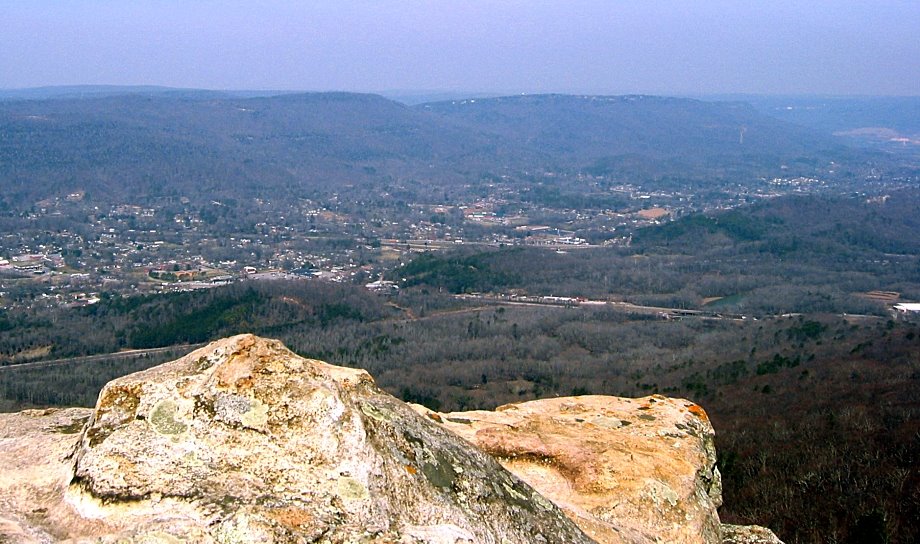
Today was our hiking day on Lookout Mountain, which means we won’t be able to move for the next few days. We started out on a little short trail called “Sunset Rock”, it was only about a quarter mile long but it was straight up the side of a cliff. Everything on Lookout Mountain is on a cliff. This is one of those places without guardrails and it was a long, long way down. It’s amazing that no one has ever fallen off the edge.


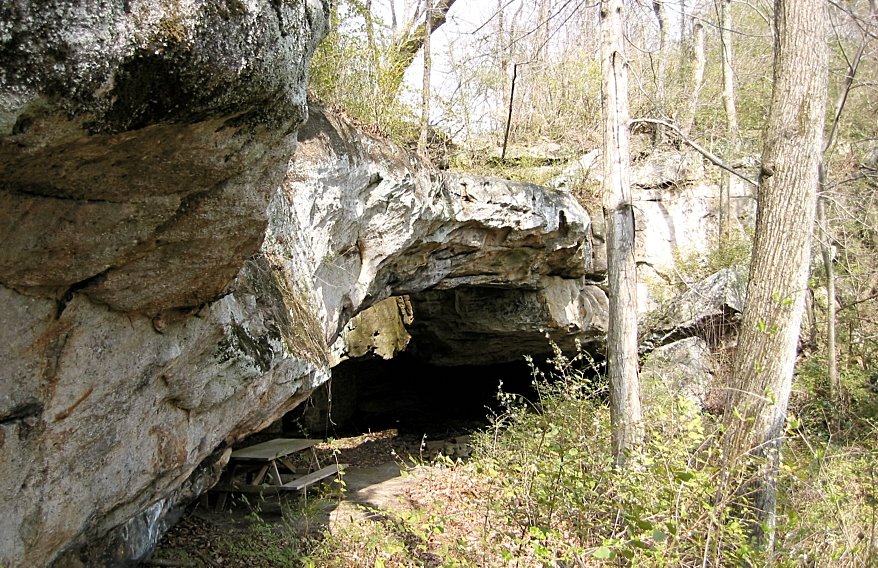
Next we drove around for 20 minutes trying to find a place to park where the car would not be towed away, they don’t like visitors in their neighborhood. We finally found a place and had to walk uphill for about ½ mile to get to the trailhead or the “Natural Bridge”, and then it was straight down for about 60 feet to get to the start of the trail. I slipped and fell that last 20 feet but I didn’t get hurt, fortunately I landed on Cathy and she broke my fall. This used to be one of the big attractions years ago but they have let it go lately and it’s getting quite over grown, after a few hundred feet of fighting through the underbrush we found it. It really is kind of neat and it looks like the city is going to fix up the trail to make it a little easier to get to. We didn’t want to try and climb out the way we came in so we just kept following the trail and about ¼ mile later we came out at the place where we had parked the car. That will never happen again.

After 30 minutes of sitting in the air-conditioned car and catching our breath we were ready to go find the trailhead for Glen Falls, this one looks easy, we can park right at the trailhead and it looks pretty flat. A half a mile down the trail and it was a piece of cake

Now we just need to climb about 100 feet up the granite wall and find the falls, we can hear it just not see it. OK 30 minutes later we made it to the spot where you can see the falls, well kind of see them you have to cross a little bridge climb about 100 stone steps try to get through a little stone tunnel that we now call fat mans squeeze and there it is. Not a lot of water coming over it but it drops into a little pond and was nice and relaxing.
Time to head back to the car, back down the granite cliff to the trail and we discovered something, the reason the trail was so easy coming in is because it was all down hill. That half mile trail turned into a 20 mile march with full packs on the way out, when we finally got to the car all I could hear was the thump thump thump of the blood rushing through the veins in my ears although I could swear that I heard Cathy in the background cussing me out about something. Go figure.

Monday, March 06, 2006

A lot of catching up, Chattanooga Area

Fort Oglethorpe & the Sixth Cavalry Museum
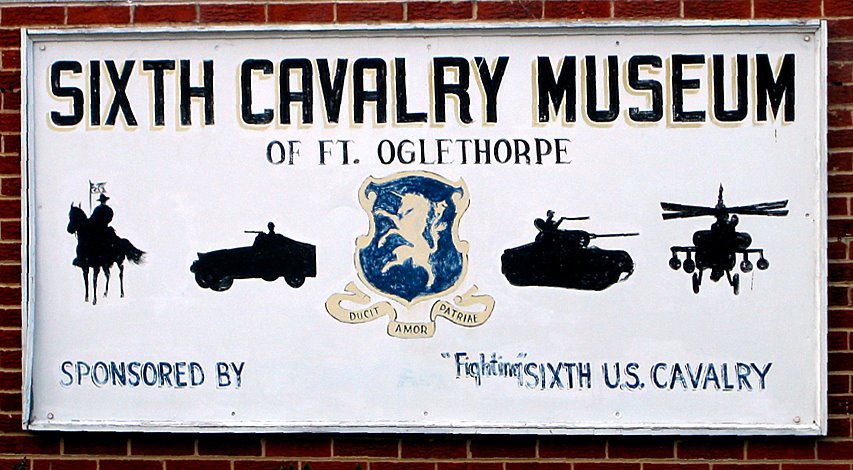
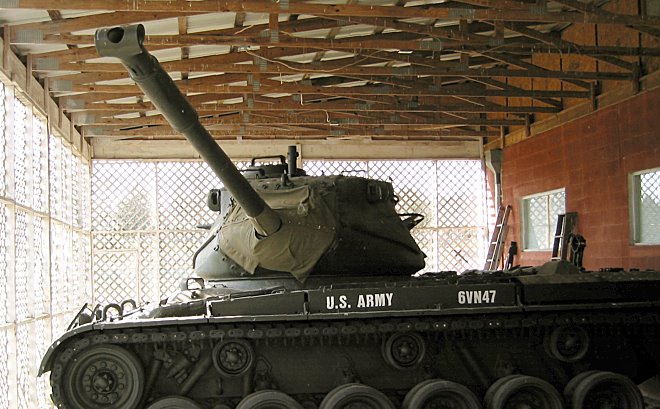
We stopped by the 6th Calvary Museum, it is a small two story building filled with displays and exhibits, which include photos, maps, uniforms and much more, most of which were donated by members of the 6th, who hold their reunion here every year. Not only do you learn the history of the 6th Cavalry, which has served on the Texas border during the Indian Wars, the Spanish-American War, and the Boxer Rebellion, in pursuit of Poncho Villa and is currently stationed in Korea. They also tell you how to float a jeep across a stream or small river if you ever need to, also on display is a Patton Tank & a Cobra Gunship.
The curator was a really nice lady and gave me the keys to the Patton Tank, really, not to drive but to open the top hatch so I could climb inside. I climb up top and looked inside the turret and decided I was a little too old and round to try and squeeze through the hatch. The museum is of the grounds of the old Fort Oglethorpe, which is now the city of Fort Oglethorpe; several post buildings have been converted to new uses. The gymnasium is now a restaurant and antique shop, the PX is now an antique store, one stable houses a gift shop, one of the officers’ houses is a bed-and-breakfast and the rest private residence. At the entrance to the parade grounds, the Post Chapel and the Post Theater are still in use. The original flagpole and the original post bandstand can also be seen. The fort held German POWs during both WWI & WWII, over 180 of them died while being prisoners here and are buried at the Chattanooga Nation Cemetery, which we are going to next.


Chattanooga National Cemetery
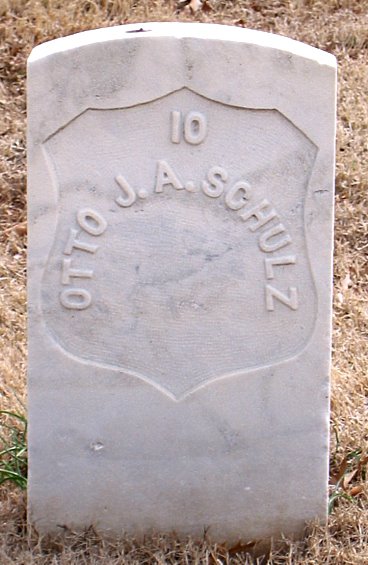
This is one of the oldest and largest Nation Cemeteries in the country, started in 1863 to bury the Union soldiers killed during the battles of Chickamauga, Chattanooga, Lookout Mountain and Missionary Ridge. At the office we picked up a Self-guided Historical tour pamphlet that an Eagle Scout made up to honor his grandfather who is buried here, it sure made finding things much easier. Like everything around here, it’s hilly, we parked at the Circle of Honor where there are about 20 memorials covering everything military from the civil war to the woman of WWII to Vietnam. This is on the highest ground so when were done playing mountain goat we still had the worst climb to get back to the car. We spent about three hours here (a lot of that time was catching our breath) there are so many interesting and unusual things to see, a Memorial archway that was built in 1868 is one of five built in the National Cemeteries, they are 40 feet tall and are modeled after the triumphal arches of ancient Rome.


A monument erected by the German Government in 1935 to honor the 78 prisoner who died during WWI, another 105 German POWs died here in WWII. As far as I could find out this is the only National Cemetery with Foreign POWs buried in it. We also found the Fourth Army Corps Obelisk monument, the Armed Forces Pavilion, the two limestone caves (closed in 1930s when two explorer died in them) and four of the Six Medal of Honor Recipients that are buried here.


Also the Andrews Raiders Monument, otherwise known as “The Great Chase”. James Andrews along with Union troops from Ohio in an attempt to destroy Railroad bridges and the telegraph lines stole the train known as the “General” they went on a 90 mile chase being pursued by the Confederate soldiers, when the train ran out of fuel they continued on foot until they were all captured a few weeks later (Disney made a movie about this). Eight of the raiders including Anderson (a Civilian) were executed. Their actions are what inspired the US Government to come up with a special medal to honor this type of courage, “The Medal of Honor”. They were the first to receive the medal.


Chattanooga Zoo
Time for a Freebee the Chattanooga zoo, this one is on the small side, they house about 21 different exhibits and a petting ranch for the kids. This is very well run zoo with very nice exhibits, better then some of the really big zoos that we’ve been to. It’s almost impossible to find since it’s hidden behind a baseball stadium in Wagner Park, you just keep driving through parking lots until you see the signs and there you are. Our absolute favorite was the albino anaconda, a mixture of snow white and sunshine yellow, we could have watched it for hours. This place is hidden so well that they looked shocked when you walk through the door; there were probably only 20 people in the zoo while we were there.


Old Coke Ovens of Chickamauga
This is another reason to just stumbled around on back roads; we came across these
100-year-old coke ovens just outside the town of Chickamauga. The Durham Coal Company used these ovens to convert coal into coke, which was then shipped by train to be used in the foundries of Chattanooga (we’ll hiked this old railroad bed a little later). The coke ovens were in operation until the Depression when they ran out of coal. The ovens were restored in the 1990’s and a few railroad coal cars were put on display. There are about 50 beehive style ovens here with plaques explaining their history and how they operated, a small pond with a footbridge and picnic tables with grills. It always amazes us at what you can find on the little back roads. Then it was into town were Cathy spotted a great little southern cooking style restaurant “The Melon Patch” great food and plenty of it.


Lula lake Land Trust
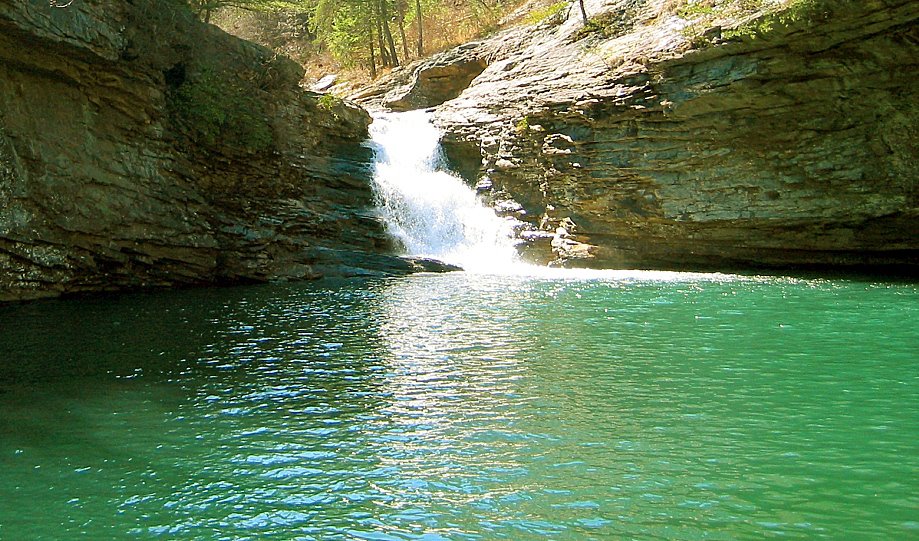
Here is were the railroad bed comes into our visit, the old railroad bed runs right through this land trust and is now the main trail that takes you to Lula Lake and Falls. This place is run by volunteers and is only open to the public on the first or last Saturday of the month between 9am – 5pm. We got our map from the guide and immediately folded it up and put it in our pocket because who needs maps. There are about ten miles of marked trails so we choice was the easy one that takes you to Lula Lake and then Lula Falls, it follows the old railroad bed all the way their and back. It took us right along the side of the creek for about a mile until then we came to the new footbridge, (the old one was washed out during a storm) from there we could see the lake and the top part of the first falls.
On a little further and we found a little picnic area with a fantastic view of the lake and smaller falls, Cathy found a small path made for stones that she insisted that I take you down to the lakes edge. The water is crystal clear in the creek; the lake due to its depth (65ft) is a beautiful emerald green. Another quarter of a mile and were at the big falls, Lula Falls, I would guess that they are about 80 to 100 feet tall. Again Cathy spotted a trail that leads down to the base of the falls, this is a very steep, muddy and slippery, Cathy decided to stay at the top, she said it would be easier for her to dial 911 from there. I wanted to get some pictures so down I went. I made it to the bottom with three slips and no falls, after taking a few pictures I saw that you could walk around behind the falls to a small cave like opening, hey as long as I’m down here. Right then wind decided to change a little so I ended up getting pretty wet from all the mist (really it was the mist, I didn’t fall in). I chalked up another five or six slips with one where I buried my hand in the mud to keep from having a muddy bottom.
When climbing out it was like climb ten steps and stop to caught my breath, repeat, repeat, repeat until I got to the top (probably 15 minutes but it felt like an hour). Twenty minutes of sitting to catch my breath with Cathy’s fingers poised over the buttons 911, I was ready to move on. It took about two hours to get rid of the rubbery legs, which we spent most of it in a little café on top of Lookout Mountain.


A little side trip to Cleveland
We spent one day doing a little side trip over to the City of Cleveland, no not the one on the lake. Our first stop was to see one of the “Whispering Giants” that was carved by Peter Toth to honor the Indians that were on the “Trail of Tears” which started near here at Red Clay.

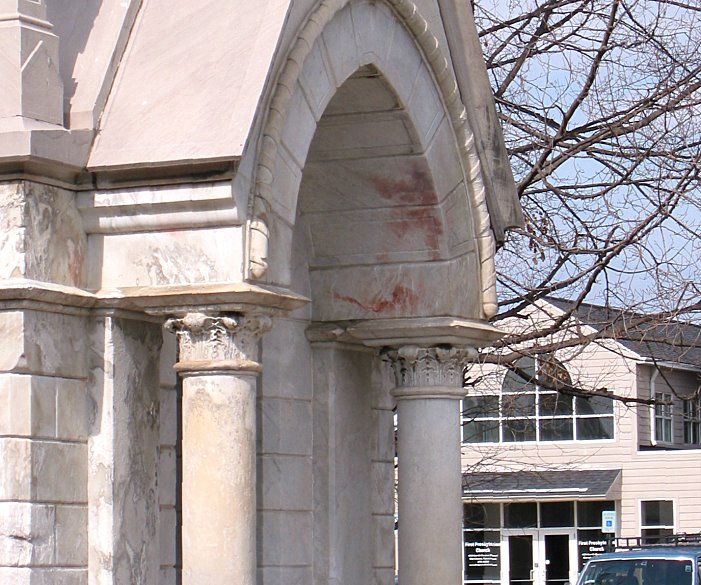
Only a few blocks away is the Bloody Mausoleum made famous by “Ripley’s Believe it or Not”, so off we go in search of blood. As the story goes Little Nina was out for a buggy ride with her Grandfather, he had done this many times before, and Nina absolutely loved riding. Apparently, Dr. Thompson lost control of the horse and buggy, because it went directly into the path of a train. Dr. Thompson was thrown to safety, but Nina was killed. Mr. Craigmiles (Nina’s father) had a mausoleum built behind the church in memory of his daughter. She was laid to rest inside, as was another infant son who died, and Mr. and Mrs. Craigmiles. Mr. Craigmiles met an untimely death after falling on some ice, which apparently triggered blood poisoning. A third member of the family had met a tragic death. If you visit the mausoleum, you will notice red streaks the color of blood appear on it. The stories say that the bloody stains first began to appear on the Craigmiles mausoleum after Nina was interred there. With the death of each family member, the stains grew darker and more noticeable. Some of the locals began to believe that the marks were blood, coming from the stone itself, in response to the tragedies suffered by the family. They have washed and scrub the stains with bleach and even replaced some of the marble but the bloody stains always reappear.


Red Clay Historical Park

Take a few roads until you think that you’re lost and you’ll find the Red Clay Historical Park, this was the Cherokee Council Grounds from 1832-1838. They moved here from Echota Ga. when the State of Georgia stripped them of all the rights to sovereignty. After a few years here the U.S.A. decided that they wanted the land and that was the start of the Trail of Tears to their relocation out west. This is a nice little park with a visitor’s center, Blue Spring and Mill Creek, a recreated village and the Eternal Flame of the Cherokee.


Nancy Ward
Make a few more wrong turns, look up on a hill and say what the hell is that and you’ll find the grave of Nancy Ward. This is her story according to the plaque that was there. Nancy was called upon to show the depth and strength of her character as a young bride while assisting her husband during a battle against the Creeks. When he was shot and killed, Nancy picked up his gun and continued the battle, rallying the Cherokee to victory. The Cherokee paid homage to Nancy and made her a Beloved Woman, a
position reserved for brave and wise women who have served the people well.
As a Beloved Woman, Nancy had full voice and full vote in all tribal councils, held the power of life and death and, with the other Beloved Women of the Council, was the final arbitrator of any and all disputes and decisions affecting the Cherokee. Her first official act as a Beloved Woman was to save the life of a white woman condemned to die.
Nancy was a devout believer in peaceful co-existence with the whites. She earned the respect of both the white government and her own people by her successful negotiations and mediations. Moravians who had been allowed to settle in the area had educated her, and she served as interpreter when the need arose. Nancy constantly traveled the territory diverting conflict between the European settlers and her people, and was the driving force behind many peace agreements - she was a true politician.
Nancy was instrumental in negotiating the very first treaty between the white government and the Cherokee, known as the Treaty of Hopewell, and was present at its signing. During the years, Nancy watched her work being destroyed as treaty after treaty was broken, and she became increasingly suspicious of the white government.
She began to speak out against the continuing sale of Cherokee lands to the whites, but her fears were not taken seriously. She moved into Tennessee where she operated a successful inn until her death.
Nancy Ward is highly regarded by the Cherokee Nation, and many honors have been bestowed in her name. A Tennessee chapter of the Daughters of the American Revolution is even named for her.
Here endth the lesson.